
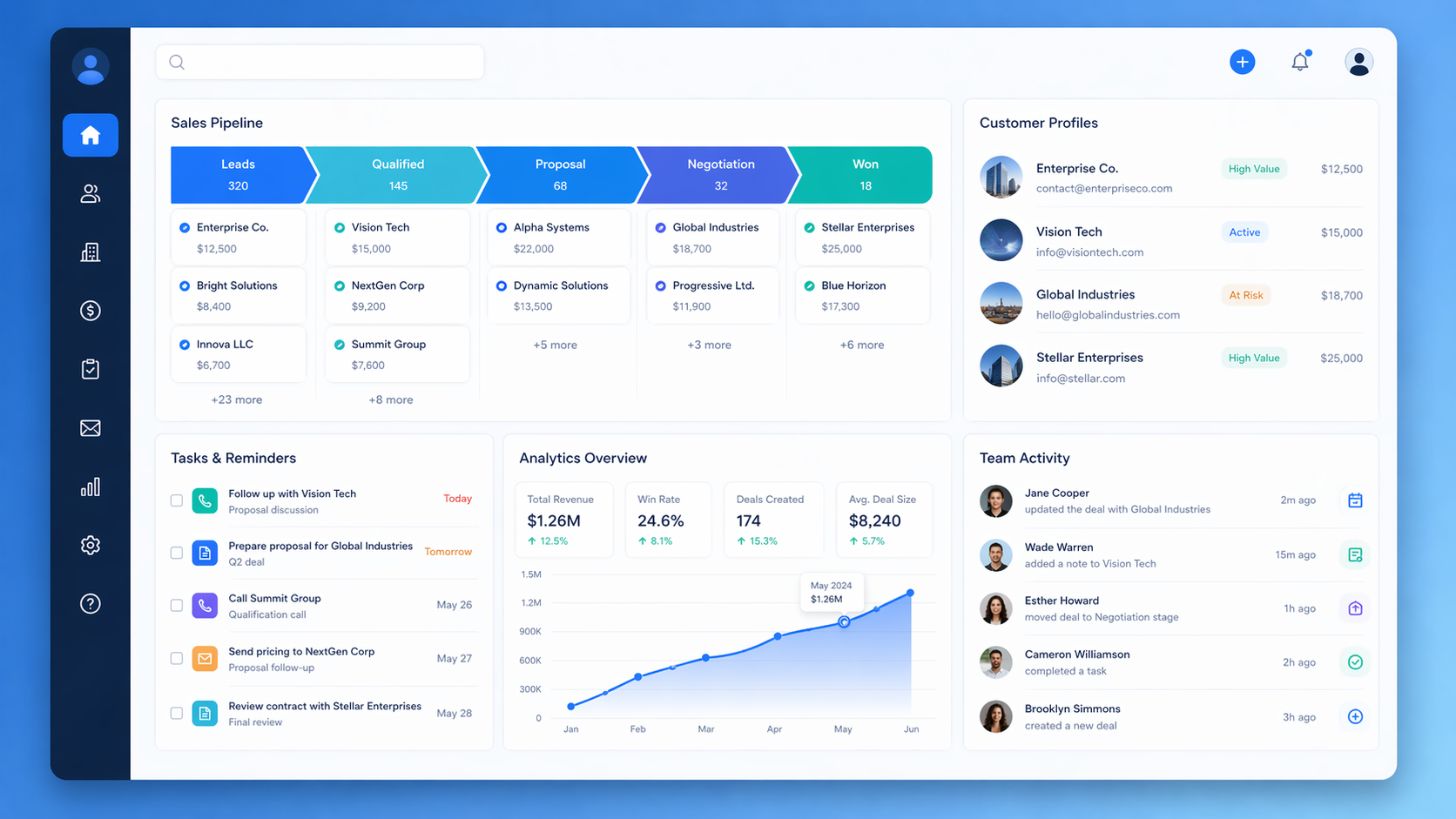
In today’s digital-first world, businesses don’t just compete on products or pricing. They compete on experience. That’s where a CRM system comes in. It helps companies manage interactions, understand customers better, and build long-term relationships that actually drive growth.
What is a CRM system?
CRM stands for Customer Relationship Management. At its core, a CRM system is a centralized platform where you store, track, and manage all customer data. This includes contact details, communication history, sales activity, support tickets, and more.
Instead of scattered spreadsheets, emails, and notes, everything lives in one place. That alone can transform how a team works.
Why CRM matters
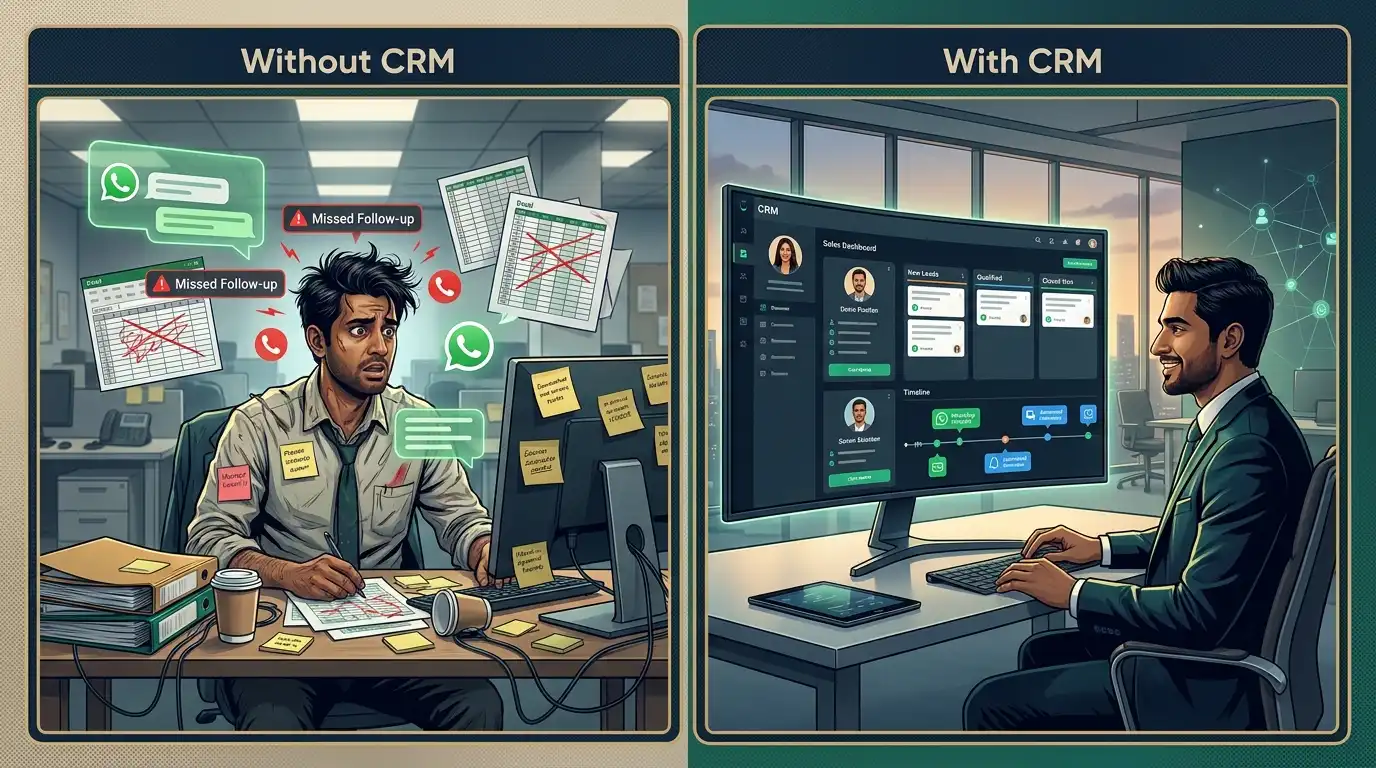
Without a CRM, things fall through the cracks. Leads get lost, follow-ups are missed, and customer experience becomes inconsistent.
A good CRM fixes that by:
- Keeping all customer data organized and accessible
- Tracking every interaction across sales, marketing, and support
- Automating repetitive tasks like follow-ups and reminders
- Helping teams collaborate without confusion
The result is simple. Better relationships, better decisions, and better revenue.
Key features of a CRM system
Most modern CRM platforms offer a mix of these core features:
1. Contact Management
Store customer details, company info, and interaction history in one place.
2. Sales Pipeline Tracking
Visualize deals at every stage, from lead to conversion. This helps teams prioritize and close faster.
3. Task & Activity Management
Set reminders, schedule meetings, and track follow-ups so nothing gets missed.
4. Email & Communication Tracking
See all conversations with a customer in one timeline. No more digging through inboxes.
5. Automation
Automate repetitive tasks like sending emails, updating deal stages, or assigning leads.
6. Analytics & Reporting
Understand performance through dashboards and reports. See what’s working and what’s not.
Types of CRM systems
Not all CRMs are built the same. Depending on your needs, you might choose:
- Operational CRM – Focuses on sales, marketing, and service automation
- Analytical CRM – Focuses on data insights and customer behavior analysis
- Collaborative CRM – Helps teams share customer information across departments
Many modern tools combine all three.
Benefits for businesses
A CRM system is not just a tool. It’s a growth enabler.
- Improved customer experience through personalized interactions
- Higher sales conversion rates with better lead tracking
- Stronger team productivity by reducing manual work
- Data-driven decisions with real insights instead of guesses
- Scalability as your business grows
CRM for startups vs enterprises
Startups often need a simple, easy-to-use CRM that helps them organize leads and manage early growth.
Enterprises, on the other hand, require advanced features like automation workflows, integrations, and detailed analytics.
The key is choosing a CRM that fits your current stage but can also grow with you.
A CRM system is no longer optional. It’s essential for any business that wants to build strong customer relationships and scale efficiently.
The real value doesn’t come from just storing data. It comes from using that data to create meaningful interactions, improve processes, and make smarter decisions.